
Involve your site
From the Netherlands we left for the Ivory Coast with seven suitcases and we are moving into our own apartment. You could read this in my blog The start of a life outside the Netherlands.
We have taken over some furniture and kitchen inventory from the previous owner. We have no intention of buying everything new at this time. What we miss we will supplement.
In Abidjan there are a number of department stores such as the China Mall and Orca, where we can replenish our much-needed needs. The quality of things in these stores is not great, but for the first period a fine solution.
Those who start living outside the Netherlands will also want to integrate at some point to feel at home.
One of the first things we arranged in our apartment was internet through Nord VPN and installing our own apps via Channel Digital.
It contributes to a sense of home. For example The Smartest Man,
I'm leaving and can watch Formula One, as you are used to.
From Emigrating to Integrating,
Moisture mold and how to prevent it?
The apartment was unoccupied for only four weeks before we moved in.
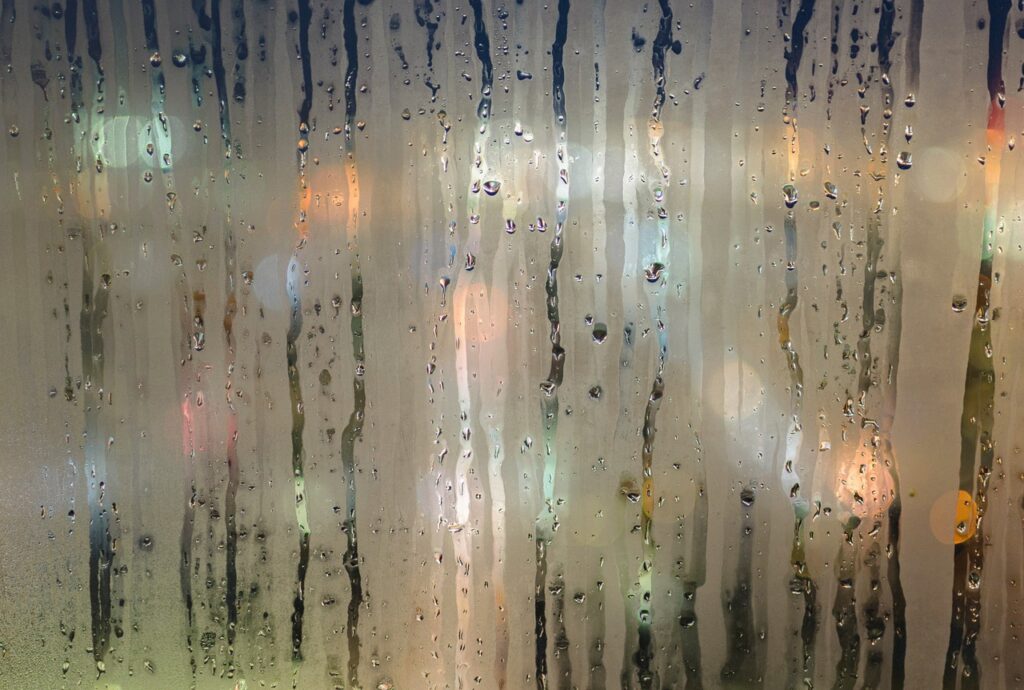
Because there was no ventilation during that period, the built-in cabinets, window rubbers and sofa were full of moisture mold.
Structurally, buildings in the Ivory Coast are not equipped with ventilation systems as standard.
Added to this is the high humidity in the Ivory Coast, which is the cause of this moisture mold.
Vent So is very important and we apply that directly.
Here are some indispensable tips;
- Clothes we hang on hangers.
- We do not close the closets completely and we place trays with moisture retarders.
- All the windows we set ajar.
- We don't dry laundry inside
Take these tips wholeheartedly, because it makes life a lot more pleasant when you get to come home to a clean house.
From Emigrating to Integrating,
From warm to hot
Africa conjures up images of sun and heat, and after my experience in Ghana, I expected the same in the Ivory Coast. After all, both countries are next to each other.
Yet the weather in the Ivory Coast proved different. It is not only hot there, but really hot.
In the evenings and nights the temperature rarely drops below 25 degrees, and in the early morning it warms up quickly. Without clouds, the thermometer shoots up to 30 degrees by as early as nine o'clock.
Even in the rainy season, it doesn't cool down. Throughout my stay, I never wore a long-sleeved shirt or booties, let alone tight jeans. It is simply too hot for it.
Fortunately, your body adapts quickly. If you don't set the air conditioner too cold and slow your pace outside a bit, it's quite manageable. And after a while, you can really start to love it.

The weather in Africa follows its own rules!
In the Netherlands, I always relied on rainfall radar to prepare for the weather.
Here in Africa, is Googleweather perhaps the only source that somewhat approximates reality.
The weather in Africa is so changeable that you are never 100% sure.
My tip? Just look at the sky!
When it's rainy season, I always carry an umbrella. That's all you can do.
In the morning, the sky can be bright blue, but an hour later, it can be pouring rain, only to clear up again.

What am I smelling?
In the Ivory Coast, the economy largely revolves around agriculture.
You have lots of coffee, bananas and pineapples here, but it is mostly cocoa for which the Ivory Coast is famous worldwide.
Believe me, you notice it immediately. As soon as you leave the airport terminal in Abidjan, you are immediately greeted by the sweet, strong smell of cocoa.
I love the smell and combined with the warmth it really makes me feel cozy.
Unfortunately, waste disposal in the Ivory Coast is not optimal and many people are not used to using a trash can. Used bottles, bags and other garbage are just thrown on the street. No one seems to care. Even in the better neighborhoods, the roads and alleys are often so narrow that garbage trucks can't get there, so people just don't know where to put their trash.

For us Europeans it is quite normal to have a toilet in our homes, but in many parts of Africa, especially East Africa, the sanitation crisis is still severe.
7 in 10 households do not have access to clean sanitation. It is also where the term 'Flying Toilet' comes from: people put their big needs in a bag and then throw it, literally, through the air. "Good riddance," but unfortunately, of course, that is not the case.
Amref Health Africa Foundation has been working hard for years to make Africa cleaner and healthier, but this is a process that takes a lot of time and effort. It is a harsh reality, but fortunately there are more and more initiatives trying to improve the situation.
Hygiene in the home
Prevent Cockroaches in the House: Considerations for a Hygienic Apartment
It may take some time to completely eliminate cockroaches from your home, but it is certainly possible with the right approach. With consistency and care, you can banish them for good. Here are some important points to consider:
- No leaving wet mops or towels on the floor.
Wet cloths attract cockroaches, so make sure they are always cleaned up.
Do not leave them in the bathroom or other places. - Daily cleaning.
Clean your home every day with detergent.
Food scraps should be disposed of immediately so that they do not attract cockroaches. - Taking out garbage on time.
Don't put your trash inside for too long; take it to the dumpster daily.
Food leftovers in the garbage bag can attract cockroaches. - Cleaning and properly storing fruits and vegetables
Wash fruits and vegetables immediately upon returning home with drinking water. Do not store them open on the table, but put them in sealed containers or in the refrigerator or freezer.
This prevents cockroaches from feasting on food scraps. - Make it a routine.
It may take some getting used to, but by learning these habits, it becomes natural.
With these measures, you can keep your apartment clean and free of unwanted guests.
Consistency is the key!
The Busy Among Us: A World of Differences
Our apartment is located on a street that, despite being only destination traffic, is always bustling with life.
Maybe it sounds crazy, but if, like us, you're not used to early mornings or late nights filled with chatter, it's something you really need to learn to adopt.
Below our apartment, just a stone's throw away, lies a piece of the world that is almost unbelievable.
From Emigrating to Integrating,
Another world, so close
There is a building, half demolished, abandoned. It is a place where families live their lives amid the ruins.
There, among the crumbling walls, people hang their laundry to dry. Children are playing in a bucket of water, trying to wash themselves. It's a scene you won't soon forget. The harsh reality of life.
Early in the morning, I watch as men begin their trade in laundry. Large plastic barrels are filled, full of clothes and blankets, which they wash for a few XOF (West African CFA francs).
Then there are the women, crouched among the debris, busy cooking.

At first it felt strange, even uncomfortable. Coming home with a full shopping bag and suddenly feeling so rich, so privileged.
The contrast between our prosperity and their poverty cannot be missed.
You live so close, but also so far apart.
Still, I realize that it is important not to dwell too much on the situation. It is part of life here, just as the sun rises and sets.
In this street, where life takes place in all its rawness as well as its beauty, you learn anew every day. Sometimes even, in the most unexpected moments, there is a smile that warms your heart.

Always Something to Hear (And Laugh)
If you think you live on a quiet street, stop by here. With us it's never quiet, especially if you look at the corner of the street. That's where the pop-up garages. Cars, motorcycles and who knows what else, are patched up. Headlights are replaced and batteries are given a second life. Entire bodies are dented out, by a few hefty taps with a hammer. At least, that's the intention, but in some cases they seem just a little too fancy.
In the early morning, when you are just rolling out of bed, the women leave for the main roads with their wares. The smell of fresh produce mingles with the chaos of the streets as they set up their stalls. As you wonder if you can ever get back to sleep, another batch makes its appearance on the streets.
From Emigrating to Integrating,
Trade and commerce everywhere
Young men with their trades; One pulls a wooden cart behind him, full of trash and electronics. Here comes the next with a coffee cart, yes, a coffee cart on three wheels - how creative can you be?
Then there is the man with the foot pedal sewing machine, who repairs clothes.

If you think you will ever find peace, forget it. Unless it's Sunday. Then it's as if the whole neighborhood suddenly falls asleep. The locals apparently have an appointment with the church. Yes, this is the time when we, the happy few, finally be able to sleep in. Because if there's one day when the world takes a breath, it's on Sunday.
Never Boring, looking for new innovations.
The street is alive, the people are alive. Honestly, I'm almost curious to see if tomorrow I'll have another innovation will hear.
Maybe a washing machine on wheels or a mobile cafe on a skateboard.
I really don't look at anything anymore.
From Emigrating to Integrating,
Intrusive Help or Desired Contribution?
You have just unpacked your bags, you have finally found your niche in your life outside the Netherlands and then, suddenly, they are at your door: young women asking for work.
From day one they are there, ready to help you ... or rather, to offer their help. On the one hand, of course, you want to give someone a chance. We all know how nice it is to have a job. On the other hand, you have a plan of your own.
You want to integrate first and find your own rhythm. There is no need yet for help from anyone else (unless, of course, you are really in trouble with a pile of laundry).
But the locals see a trade in everything. Then I mean everywhere. A trade in poitie control? Sure, that's not what you thought it would be.
and you can read all about that in my blog "The police are your best friend, right?"
It's not just about the people you get at the door for work, but also about the people you meet at the supermarket.
There, the party continues as usual.
Are you waiting patiently in line at the checkout with your fully loaded shopping cart? Fine, but another checkout line is already opening and before you know it, someone is putting your groceries on the belt and packing them into boxes or bags.
Not enough yet? After checkout, the cart is simply wheeled to the car for you and your groceries are neatly placed in your car. You probably didn't even ask for help!
After a while, they even begin to recognize you. The more tip you give, the more they do - the human economy. Plus, a tip is a welcome addition to their income.
Even when parking. Also one of those typical moments when you think: "What could possibly go wrong?" There is always someone on the lookout stopping traffic and clearing the way for you. "So friendly!" you think at first, until you realize that they actually expect something in return. It is often uncomfortable at first, but also very African.
My main tip: don't get annoyed.
This is just how it works here. And honestly, it feels pretty good to give something to someone else once in a while.
Sometimes the imperative content, can really push the limit of rudeness, but a simple "no, thank you" is often enough. Usually, and this is the nice thing about this experience, I can show my gratitude, without really feeling used.
Want to know more about this particular work culture? Then be sure to read my blog "Working for my Mzungu boss", Where I share my experience with my domestic worker. Believe me, this is not only educational, but also very funny!
Power outage
Power outages in Africa: Adapt or Complain?
As you have read in my earlier blogs about trial emigration, a power outage is really quite normal in Africa. For us Dutch, this takes a bit of getting used to.
In the Netherlands, you always get a notification when a power outage arrives. Especially if it lasts longer than a few minutes, due to work on the grid, for example.
Here in Africa? Well, power outages seem to be a mystery, with reasons ranging from “a truck hit the cables" to "it's raining too hard".
At first, I didn't want to complain. This is part of it, I thought.
But when we were away for a long weekend and upon returning home found an apartment that had literally been heated up, it was a bit of a shock. The contents of the refrigerator and freezer were also completely spoiled. Not so nice, in other words!
In the Ivory Coast, power outages are less frequent than in Ghana, but when they are there, they last longer.
At night is usually quiet, but during the day? Prepare for the necessary interruptions.
Fortunately, our apartment complex has a generator for the elevator, but it is not strong enough to power all the apartments.
The short-term solution: if you're going to be gone for more than a day, make sure your refrigerator and freezer are pretty much empty. Otherwise, you may have quite a spoiled supply awaiting you upon your return.
So yes, in the apartment in the Ivory Coast, a power outage is part of it. And I have to learn to deal with it. But fun is different!

Water resources in Africa: Preparing for the Unexpected
In Africa, drinking tap water is not really an option unless you have a water filter with reverse osmosis. In that case, fortunately, you can just drink from the tap.
For the rest of us, it is advisable to purchase a hefty supply of bottled water each week.
Both for drinking and washing your fruits and vegetables.
What I often do is fill a large pan with tap water and boil it long enough. That makes it drinkable.
But there are also times when you really can't be prepared for what happens.
For example, when no water came out of the faucet for four days because work was going on down the street on a new construction complex.
The solution? Put a 300-liter plastic barrel in the bathroom and fill it with tap water. It's a great way to do a cat wash and flush the toilet. This way I'm sure you'll always have some water in the house for the unexpected moments.
In short, it's super important to always have a little water in reserve. A small effort that makes your life just a little bit easier!
English in the Ivory Coast: The Great Expectation
Oh, of course there will be fixed English spoken, because we Dutch always expect that, don't we?
Unfortunately, that is an assumption of the highest order. Ivorians who have studied do speak English, but you won't necessarily find them in the local supermarket or a cozy restaurant. The fact is that millions of children worldwide, many of them in Africa, do not have access to education.
Poverty, inequality and violent conflict prevent many children from attending school.
Despite all efforts to improve education worldwide, these barriers remain persistent, significantly reducing children's opportunities.
And if you think you can get by with an Uber driver, think again. English? "No small small." And trust me, that "small small" is really very small small. It becomes immediately clear: if you want to survive here, you better learn French.
Within two months, I was fairly proficient in the French language. Walking smoothly through the supermarket, making pleasant conversation in a restaurant (or at least trying to) and even being able to give my Uber driver a few directions. After all, communication is essential.
Just asking a question without someone looking at you like you just came from Mars immediately makes life a lot easier.

From Emigrating to Integrating,
Is the Ivory Coast as shiny and beautiful as it sounds?
As we prepared for our departure to the Ivory Coast, it sounded like a wonderful place: shiny, beautiful, full of adventure.
I was curious if that would actually be the case.
Of course, what you like is very personal. If I'm honest, my first impression after living here for three months is mostly that it's ... brown and dusty.
The piles of trash on the streets do not exactly contribute to this.
But there are certainly beautiful places!
You'll discover those in my other blogs.
So, do you read on? There is so much more to explore!
Sound off for lots more experiences, tips and inspiration!
Countries - Ivory Coast.


 EN
EN  NL
NL